Introduction
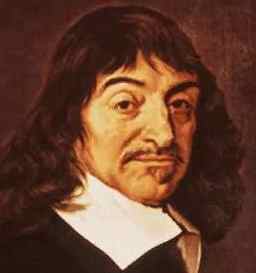
Rene Descartes (1596-1650), who made his mark in the realms of philosophy, science and mathematics, is probably best known today for his proof of existence in the statement, "I think, therefore I am" ("Cogito ergo sum"). But Descartes himself regarded progress in medicine as the ultimate goal in all his endeavors. Throughout his mature life he devoted a great deal of his time to dissections, vivisections and physiological experimentations. The most important result of his work as a physiologist rests on the concept he established of the human body as a machine whose structure and behavior were to be understood entirely on mechanical principles. Let us take a closer look then at Descartes’ idea of man as machine, including its development through Descartes’ life and the resulting effect it had on the future of physiology.
Descartes’ most complete body dealing with the mechanistic system was his Traite de l'homme (The Treatise of Man, or simply On Man) Although ready for’ publication as early as 1633, Descartes chose to withhold it when he heard the news of the condemnation of Galileo that same year. Fearing that his ideas might be considered heretical by the Church, he never allowed On Man to be published and it wasn’t until over a decade after his death that it finally reached print.1 In the intervening 20 years, however, the ideas set down in On Man continued to have an important influence on the further development of the physiological concepts of Descartes. It was during this period that he worked out some of the questionable parts of On Man and answered them with De la formation du foetus (On the Formation of the Fetus, alternately titled The Description of the Human Body).2 This work, completed shortly before his death, combines with On Man to give the complete presentation of the theory of mechanism.
On Man begins with the proposition that we are studying a statue rather than a real man. This imagined robot is to be considered as any real man, but by using the statue imagery, Descartes is using “philosophical license,” allowing us to “hypothesize and analogize freely.”3 Like a real man, our statue or “machine de terre”4 possesses both a physical body and an immaterial soul. Hence, right from the start we see that the mechanistic man of Descartes is quite different from any other machine, since no other machine has a soul. So while he goes on to describe man as a mechanical clockwork, he doesn’t go so far as to extricate the soul from man, nor does he ever deny the role or existence of a supreme being gazing dawn upon the mechanical universe He has created. In Cartesian man, all bodily systems are subservient to the nervous system, which in turn serves the commands of the rational soul. And this entire package moves about in a clockwork universe put together by the Great Clockmaker.
After the statement of this proposition, On Man then goes on to describe various biological processes of the human body in mechanical terms. For Descartes, digestion is a process by which food is broken up and agitated by fluids in the stomach. Necessary and unneeded particles are then separated from one another in a filtration process performed by a series of sieves, in the form of pores and vascular openings, along the intestinal walls. The necessary particles then go through a second filtration along with a fermentation process in the liver, which gives them the qualities of blood. This blood then drips from the liver through a large vein (the vena cava) into the right atrium of the heart. The heart then, acting as a source of intense heat, vaporizes the newly formed blood. This vaporization causes an expansion of the heart and the arteries. As the blood vapor moves further from the heart and toward the cool air of the lungs,5 it cools and condenses, causing the heart and arteries to return to their original size. As the blood makes its way through the arterial system,6 it is further portioned off through special pores to account for nutrition, bile and urine. The activities of the heart and arteries is, then, continual and automatic and thereby not under the control of the rational faculties.7 Moreover, the heart acts as a source of heat, rather than as a pump.
Descartes had come up with this “heart as heat machine”8 theory even before reading of the work of Harvey. Although Harvey had maintained that the heat of the heart was greater than that of any other part of the body, he did not take the Cartesian view that the heat was so great that the blood was immediately vaporized upon entry into the heart. Harvey rather held that the blood remained a liquid. Upon hearing of -Harvey's work, Descartes rejected the idea of the heart as a pump, maintaining confidence in his own view of the heart as a blood evaporation center. But Descartes did adopt Harvey’s ideas of circular arterial motion and worked them into his own system.9
A description of the nervous system presented Descartes with more of a challenge, but one he boldly attempted to meet. He felt that the nervous system was central to the human mechanism and the one for which all the other systems were designed to supply the material basis of energy.10 The nerves themselves are said to be as hollow tubes, similar to water pipes. Within these tubes is a “fine, material substance,” the “animal spirits.”11 Descartes speaks of these animal spirits as an “air” or a “wind” or a “flame,” but speaks of them as if they have the qualities of a liquid.12 Descartes’ nervous system consists of the brain as the central point from which the tubular nerves carry the animal spirits throughout the body. The animal spirits are formed of the most quickly moving particles of the blood, speedily making their way from the heart to the brain, where they are separated from the other parts of the blood.
The movement of the animal spirits is under the control of the pineal gland in the brain. It was this gland that Descartes felt was where the rational soul itself was located. This presumption was based on his erroneous belief that the pineal gland was to be found only in man but not in any of. the lower animals.13 It was the animal spirits, issuing out of the pineal gland and into the muscles that would cause muscle movement. Thus, all movement of mechanistic man is controlled by the rational soul in the seat of the brain.
But Descartes notes that the great majority of our movements do not depend on the mind at all: the beating of the heart, the digestion of food, respiration while asleep, and even walking or singing when the mind is paying little or no attention. He uses an example of a man falling who thrusts out his arms to keep from injuring his head. Today we call these involuntary, sometimes instinctive acts, while Descartes describes them as the result of a series of mechanical responses and reactions involving the animal spirits responding to outside stimulus, thereby producing movement without the mind calling for it.14
From this point, Descartes goes on to discuss bodily sensations in great detail and fits them quite neatly into his previously developed description of the nervous system. Beginning with sight he describes the eye, somewhat like Kepler, as a system similar to our modern-day camera. Rays of light. reflecting off an object bounce to the retina, causing nerves to jiggle. This jiggle is immediately transmitted to the interior of the brain, where it is interpreted by the rational soul. Likewise, the other four senses operate on a system of jiggling nerves which send specific patterns to the pineal gland for interpretation.15
Now On Man proceeds to discuss the matter of emotions and feelings experienced by humans. Again, as with the five senses, it is a matter of messages being delivered through the nerves by the animal spirits. These messages vary according to the functions of various bodily parts. Certain outside stimuli will cause the body to feel different ways, depending on whether the stimulus is interpreted to be good or ill for the body. Once again it is the pineal gland that acts as the interpreter of the outer stimulus and dictates which mood or feeling the body will feel.
The final discussion in On Man concerns itself with memory, dreams and imagination, all of which are said to be the result of the rational soul interacting with the nervous system. But then Descartes points out an important difference between these and the body’s method of dealing with sense interpretations: though memory, dreams and imagination force themselves upon the pineal gland in the same abrupt manner as the sensations, the mind does seem to have the capability of recalling these at will. When this is done, however, these images and memories are accessed from brain patterns by animal spirits sent forth from the pineal glands. In apprehending these brain patterns, the mind is looking beyond itself. Such an ability allows the machine to function sore perfectly and securely; it is a benefit shared by none of the lesser animals.16
In the aftermath of completing On Man, Descartes began working on De La formation du foetus which would reach completion in the late 1640s. He wrote this work as a way of dealing with issues left open in On Man, notably how reproduction fits into the mechanistic system. Recently proposed theories of generation had left Descartes to realize that his own system was incomplete without his own explanation of such a primary biological phenomena.
Basically, Descartes said that when the male and female seeds join together, they form a "corpuscular fermentation."17 These fermenting particles in motion form the heart and some others form the lungs. As the process continues, some of the particles form streams that develop into blood vessels. Then membranes and fibers form and intertwine to form the various solid body parts. While this all may seem very vague and imprecise, it is in fact how Descartes presented it, and much to his own satisfaction. He seems to have been pleased to have completely explained physiology in absolutely mechanistic terms. From birth to death, all life now could be explained with this Cartesian theory.18
Critique and Legacy
The success of these two works, On Man and The Formation, lies not in their specifics, but in their general theory. For as would be shown later, the specific functions described by Descartes are, for the most part, in extreme error. Despite the fact that he wrote a century after Vesalius and had a wide range of specific medical knowledge at his disposal because of advances made since, Descartes seems to have ignored evidence that would have run counter to his system. His views tend to be throwbacks of a bygone era. Although he studied much animal anatomy, and did dissections, he seems to have done his experimentations with a previously decided-upon conclusion already in mind. At other times, when facts were lacking, it appears he would merely fill in his own. For example, he rejected Harvey’s theory of the heart as a Pump because he was too pleased with his Own theory of the heart as a heat machine boiling the blood into vapor. Certainly the technology existed at the time for him to have tested such a theory: it was only a matter of using a thermometer to measure the temperature of an animal’s heart.19
So when judged from a view to precise anatomical knowledge, Descartes can be accused of inventing a system based as much on imagination as on anatomical knowledge. But from the view of his overall purpose, he is quite successful in his goal to regard the physical and mental aspects of man in the same manner as that of all other scientific problems. In considering the body in such a way, he was an immediate forerunner of and influence on a generation of scientists who would begin to look at the body from a strictly materialist standpoint. In considering the mind in a strict physical manner (the soul in the pineal gland notwithstanding), he was ahead of his time probably by centuries.
But then to consider the role of the pineal gland further, it seems odd that Descartes went as far as he did in declaring the human body to be the same as any machine but to not go the next logical step and declare the nonexistence of any such nonphysical body as the soul. But he not only keeps the soul in his system, he continues to give it an ever-important role in the functioning of the body even going so far as to point out that without the soul, there is no life (except for the animals, which were strictly soulless automata).20 Descartes also keeps God in his system, as the perfect being that created the clockwork universe and set it in motion. With this idea, Descartes is a prophet of Deism, but he doesn’t settle himself in as a deist, for he believes that all things require God to exist since all things are attributes of God, with God being the only true substance. By keeping both God and the soul in his system, Descartes manages to hold on to the last threads of an old belief system while at the same time ushering in a new one. Perhaps this was an attempt to dissuade any suspicions of the Church that the new sciences were going to undermine all its teachings. But because of Descartes’ straddling of a fence between two worlds, he upsets proponents of both camps: depending on your outlook, he has gone either too far or not far enough.
But where Descartes did not venture, his successors did. Most notably, Julien Offray de La Mettrie, author of L'Homme Machine (Man the Machine) described man strictly in terms of pure materialism, ousting the soul from any role whatsoever. La Mettrie, who was a surgeon as well as a priest, said that man’s actions could be wholly explained in physical-chemical terms. He showed that contractions in the muscles of dead animals indicated that the sane could be true of man since both were virtually the same in terms of body composition. He also attempted to disprove Descartes’ body-mind dualism by pointing out physical factors which affected the mind, such as diseases, drugs and diet.
La Mettrie was greatly influenced by Descartes and credited him for his understanding of animal nature. He recognized that Descartes had made some errors, but that such errors should be pardoned of a man who had made discoveries of such primary importance.22
Henricus Regius, professor of medicine at Utrecht, became something of a student of Descartes and the two of them corresponded frequently. So enamored of Descartes’ methods was Regius that he would send his students' works to Descartes for review and commentary. It was the intimate relationship between these two that issued the start of the influence of Cartesian ideas on seventeenth-century physiology. One prominent seventeenth-century anatomist, Nicolaus Steno (1638-i686), attempted to combine the Cartesian mechanistic theory with careful anatomical investigation. Widely traveled and learned, Steno discovered the parotid salivary duct (and named it after himself) and went on to do important studies on the anatomy of the brain. In 1667, he improved upon the mechanical theory of muscular contraction in a work entitled Elementorum myologiae specimen. He further defended Cartesian physiological methodology in another work, published two years later, Discours sur l'anatomie du cerveau. But he also pointed out some of the anatomical flaws of Descartes’ physiology. One of his major discoveries was that a heart (of an animal) would continue to beat outside of the body even though no blood was entering from the body and no "spirits" flowed from the brain. This brought him to the realization that the writings of not only Descartes but any others in the medical field were merely disguising their own ignorance or repeating what others had said before when they claimed that “spirits” or “fluids” were involved in muscle contractions. “Many people talk of the animal spirits, the more subtle part of the blood, the juice of the nerves,” he wrote “but these are mere words signifying nothing.”23
Other prominent seventeenth-century physiologists owed a great deal to the Cartesian mechanistic theory, some directly by reading the works of Descartes, others indirectly by reading those of his followers, such as La Mettrie or Steno. Among those influenced were Thomas Bartholin, Thomas Willis, Giovanni Alfonso Borelli, Jan Swammerdam, and Robert Hooke.
In light of the influence that the mechanistic theory was to have on future physiologists, and in view of the fact that those physiologists accepted the basic theory, if not the specifics of the anatomy, it would seem that Descartes was successful in this endeavor. Indeed, if today we were to take all modern knowledge of anatomy and design an updated mechanistic theory around it. there is nothing to prevent its workability, especially if one were to go so far as to present it in purely physical terms, as did La Mettrie, and eliminate any nation of a soul.
For the body does indeed behave much like our machines. It needs to be supplied by fuel, it leaves behind waste products, it requires maintenance, and it is comprised of an intricate system of tubes. wires, superstructure, and protective outer walls. Perhaps, though, the system works better if we look at it in reverse: one could well postulate that all of our machines are based on the designs of human and animal bodies. Has mankind ever invented anything that does not have some model in nature? Such a question is not so easily answered and could be argued well from both sides, for if some of our inventions seem completely original, upon closer examination they could easily be construed to be a man-made copy of some natural phenomenon, or combination of phenomena.
The most difficult area in Descartes’ system concerned the operations of the mind. Today there is still much debate among philosophers, psychiatrists, and biologists as to exactly how the mind works. Nevertheless, in this past century man has come to invent a machine modeled after his own brain. In fact, very recently the debate has arisen over whether or not the most advanced computers actually think - the very reverse of the Cartesian idea of the brain behaving like a machine. For the future, there is the odd likelihood that our computers will be debating among themselves over whether they have souls.
Notes
1. Magner, Lois H., A History of the Life Sciences. Marcel Dekker, Inc. New York, 1979, pp 291—292
2. Smith, Norman Kemp, New Studies in the Philosophy of Descartes, Russell & Russell Inc., New York, 1963, pp 127
3. Brown, Theodore M., “Descartes: Physiology,” Dictionary of
Scientific Biography,. Vol. 4, 1988, pp 62
4. ibid. pp 62
5. Magner, op. cit. pp 294
6. 8rown, op. cit. pp 62
7. Magner, op. cit. pp 294
8. Ibid. pp 293
9. Smith, op. cit. pp 128
10. Magner, op. cit. pp 294
11. Smith, op. cit. pp 63
12. Foster, Sir M., Lectures on the History of Physiology,
Dover Publications, Inc., New York, 1970, pp 260-261
13. Magner, op. cit. pp 295
14. Smith, op. cit. pp 133
15. Ibid. 150-157
16. Brown op. cit. pp 63
17. Ibid. pp 64
18. Ibid. pp 64
19. Magner op. cit. 293
20. Hall Thomas S., Ideas of Life and Matter, vol 1,
University of Chicago Press, Chicago, 1969, pp 256
21. Lavine. T.Z., From Socrates to Sartre: The Philosophic Quest, Bantam Books, New York, 1984, pp 128
22. Vartanian, Aram, Diderot and Descartes: A Study of Scientific Naturalism in the Enlightenment, Princeton University Press, Princeton, 1953, pp 205—206
23. Brown, op. cit. pp 65; Magner, op. cit. pp 300—301